Bats in Your Maryland Home? What the Law Requires and How Professional Exclusion Works
Bats in a Maryland home are a different situation from most wildlife problems, and that difference matters before you call anyone. Maryland law protects bat species, restricts when exclusion work can legally be performed, and requires that the company doing the work hold a specific state-issued license. Getting this wrong does not just mean the problem comes back. It can mean legal exposure for the homeowner and a failed exclusion that leaves bats trapped inside the structure. This article covers what Maryland law actually requires, what the health risks are, how professional exclusion works, and what to look for when choosing a licensed provider in Frederick County and throughout Maryland.
Why Bats Are a Special Case Under Maryland Law
Most nuisance wildlife in Maryland can be trapped and removed at any time of year by a licensed operator. Bats are different. Baylisascaris procyonis is widespread among raccoons in the United States.
Maryland law fully protects all bat species from harm or killing. Bats cannot be trapped, harmed, or killed under any circumstances. The only legal method of bat removal in Maryland is exclusion, which means allowing bats to leave the structure on their own through a one-way device and then permanently sealing the entry points once the colony has vacated.
The second legal restriction is timing. Maryland prohibits bat exclusion work during the maternity season, which runs from March 1 through August 31. During this period, female bats are raising flightless young inside roost sites. Performing exclusion during the maternity season risks sealing pups inside the structure, where they cannot survive. This is both illegal and counterproductive, creating a dead animal odor problem inside the structure that compounds the original issue. Any company that offers to perform bat exclusion between March 1 and August 31 is operating outside Maryland law. Do not hire them.
The practical implication for Maryland homeowners is that timing matters significantly. If you discover bats in your home in June, the exclusion work itself cannot begin until September 1 at the earliest. The inspection, assessment, and planning can happen at any time. The physical exclusion cannot. Calling Nature Shield before the window opens means the work is scoped, scheduled, and ready to execute the moment it is legally permitted.
Maryland Bat Species You Are Most Likely to Encounter
Two species account for the overwhelming majority of residential bat intrusions in Maryland.
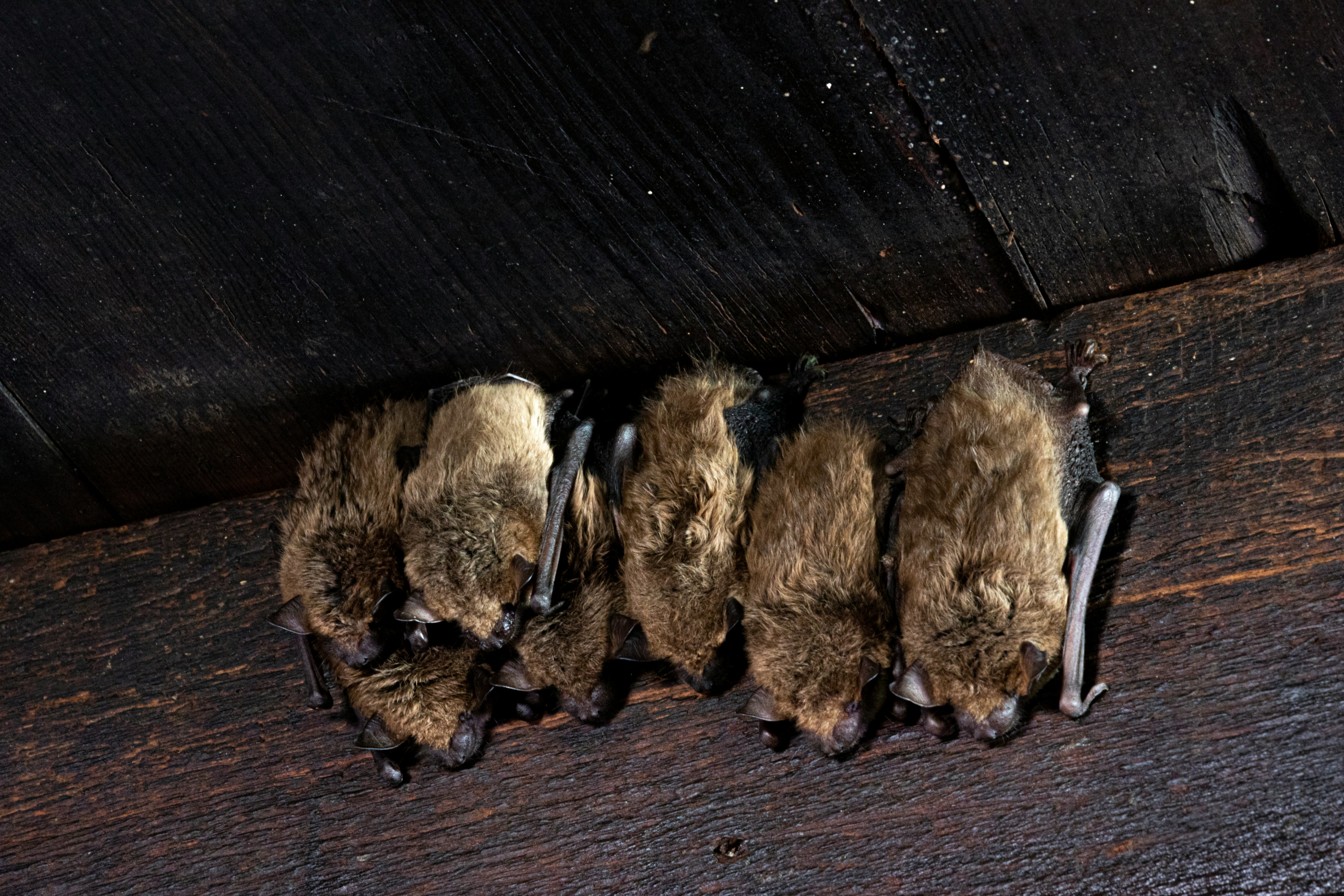
The Little Brown Bat (Myotis lucifugus) is the most common species found in Maryland homes. According to the U.S. Fish and Wildlife Service, little brown bats are highly colonial and were once among the most abundant bat species in North America. They enter structures through gaps as small as three eighths of an inch along rooflines, behind soffits, through deteriorating fascia, and around chimney flashing.
The Big Brown Bat (Eptesicus fuscus) is larger and more adaptable, frequently roosting in attics, wall voids, and behind shutters. The Maryland DNR Guide to Maryland's Bats identifies both the little brown bat and the big brown bat among the ten bat species present in Maryland, all of which are classified as Species of Greatest Conservation Need and are fully protected under state law.
Both species are insectivores and ecologically valuable. They are also both fully protected under Maryland law and carry genuine health risks when roosting inside a residential structure.
Health Risks Associated With Bats in the Home
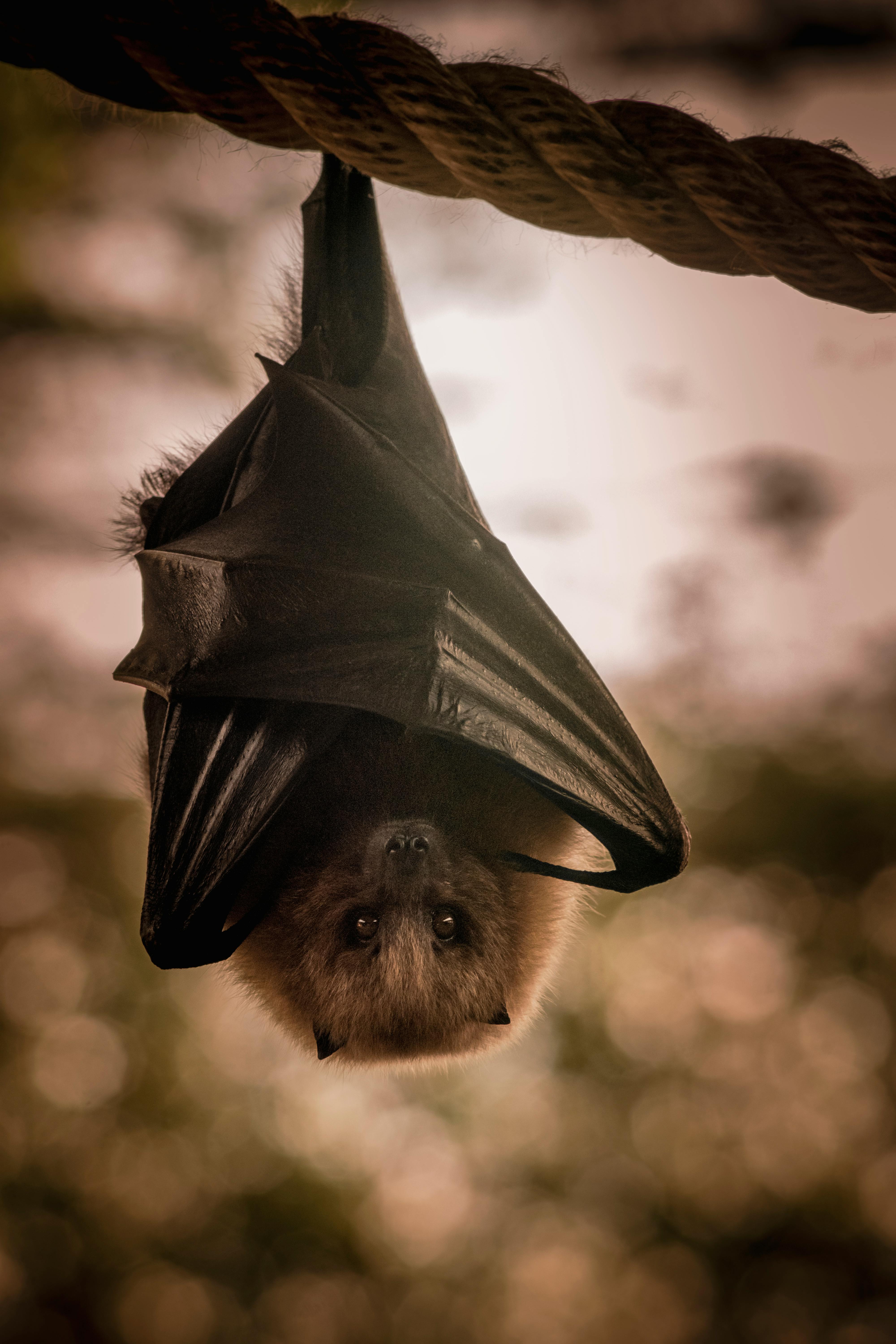
The health risks from bat activity inside a structure are real and well documented. They do not require direct contact with the animal to be relevant.
Rabies is the most serious risk associated with bats. Bats are one of the primary wildlife vectors for rabies in Maryland, and unlike raccoon or skunk encounters where rabies risk is more visible, bat rabies exposure is frequently unrecognized. A bat found inside a living space, particularly in a room where someone was sleeping, constitutes a potential exposure event even if no bite or scratch was observed. The Maryland Department of Health recommends that any indoor bat encounter be reported and assessed by a healthcare provider. Do not wait for visible injury to seek guidance.
Histoplasmosis is a fungal respiratory disease caused by Histoplasma capsulatum, a fungus that grows in bat guano. Spores become airborne when accumulated guano is disturbed, and inhalation can cause fever, cough, fatigue, and in severe cases serious respiratory complications. Guano accumulation in an attic does not need to be visually significant to pose a risk. Even modest accumulation in a space connected to the home's HVAC system can introduce spores into the living area below.
Guano and urine accumulation also causes direct structural damage. Over time, accumulated guano soaks into insulation, wood framing, and drywall, creating contamination that requires professional remediation rather than standard cleaning. Our animal waste cleanup and sanitization service handles bat guano remediation using appropriate protective protocols and disinfectants. In cases where guano has saturated insulation, full removal and replacement is required. Our attic insulation removal and replacement service addresses that scope of work directly.
How Professional Bat Exclusion Works
Professional bat exclusion is a specific, sequenced process. Understanding how it works helps homeowners evaluate what they are being quoted for and whether the scope is complete.
Inspection. The process begins with a thorough inspection of the full exterior roofline and attic space. The goal is to identify every entry point the colony is using, not just the primary roost entrance. Bats use multiple access points, and a failed exclusion almost always traces back to secondary gaps that were not identified or sealed. The inspection also assesses the size of the colony, the extent of guano accumulation, and any insulation or structural damage that will need to be addressed after exclusion is complete.
One-way exclusion devices. Once all entry points are mapped, one-way exclusion devices are installed at the primary active entry points. These devices allow bats to exit the structure on their own schedule but prevent re-entry. Bats leave each night to forage and return before dawn. Over the course of several days to two weeks, the full colony exits through the one-way devices and cannot return. This process works with the bats' natural behavior rather than against it, and it is the only method that complies with Maryland law.
Sealing. Once the colony has fully vacated and no activity is detected at the exclusion devices, the devices are removed and all entry points are permanently sealed. This is the step that determines whether the exclusion holds long term. Every gap along the roofline, every deteriorating soffit junction, every open vent, and every gap around chimney flashing needs to be addressed. Our soffit, fascia, and roofline repair service handles the structural sealing work. Our vent covers and chimney caps service closes overhead access points permanently.
Guano assessment and cleanup. After sealing is confirmed complete, the attic is assessed for guano accumulation and insulation damage. Cleanup and remediation are performed where needed using appropriate equipment and disinfectants. This step is not optional for attics with significant accumulation. Leaving contaminated material in place creates an ongoing health risk and, in the case of saturated insulation, a persistent odor problem.
All wildlife-related repair and exclusion work performed by Nature Shield is backed by a one-year warranty.
What Bat Exclusion Costs in Maryland
Bat exclusion is typically the highest-cost wildlife removal service homeowners encounter, and that cost is legitimate given the legal complexity, the specialized exclusion equipment, the timing restrictions, and the scope of work involved. Several factors influence the final cost of a bat exclusion project:
Colony size. Larger colonies require more exclusion devices, longer monitoring periods, and more extensive sealing work once the colony has vacated.
Number and location of entry points. A roofline with multiple deteriorating access points requires more sealing work than a structure with a single identifiable gap. Entry points that require scaffolding or specialized equipment to access add to the labor scope.
Guano accumulation. The volume of guano present in the attic directly affects the cleanup and remediation scope. Heavy accumulation that has saturated insulation requires full removal and replacement, which is a separate cost from the exclusion work itself.
Insulation replacement. Attics where insulation has been contaminated beyond remediation require full removal and replacement. The size of the attic and the depth of existing insulation both factor into this cost.
Structural repair. Roofline damage at entry points, deteriorating soffits, and damaged fascia boards that need to be replaced as part of the sealing process affect the overall project cost.
Nature Shield provides a free inspection and a detailed quote that covers the full scope of the job. The inspection is what makes an accurate quote possible, which is why we do not provide firm pricing over the phone without seeing the structure.
Why the WDCO License Matters
Not every pest control company in Maryland is legally authorized to perform bat exclusion work. The specific license required for nuisance wildlife work in Maryland is the Wildlife Damage Control Operator license, issued by the Maryland Department of Natural Resources. Nature Shield holds this license, which authorizes our team to legally perform bat exclusion and all associated nuisance wildlife work throughout the state.
When evaluating any company for bat exclusion in Maryland, confirm they hold a current WDCO license before agreeing to any work. You can verify licensed Wildlife Damage Control Operators through the Maryland DNR Wildlife and Heritage Service. A company performing bat exclusion without this license is operating illegally, and any warranty they offer carries no regulatory backing.
Nature Shield is also fully licensed by the Maryland Department of Agriculture for pest control services and is fully insured. As a veteran-owned company, we operate with a standard of accountability that is straightforward: the work either holds or we come back and fix it.
Serving Homeowners Throughout Maryland
Nature Shield provides bat exclusion and wildlife removal throughout Frederick County, Carroll County, Montgomery County, and surrounding Maryland communities. We are based in Frederick and respond quickly across our full service area. If you have discovered bats in your home, the earlier you call the more options you have for scheduling exclusion work within the legal window.
Schedule Your Free Bat Inspection in Maryland
Call Nature Shield at (301) 970-9709 or request your inspection online. The inspection is free, covers the full roofline and attic, and produces an honest assessment of the colony size, entry points, and full scope of work required. If you are calling during the maternity season, we will schedule the inspection immediately and have the exclusion work ready to execute the moment the legal window opens.
Related Services: