Raccoon in the Attic: What the Sounds, Smells, and Mess Are Telling You
That thumping above your ceiling at night is not your imagination, and it probably is not the house settling. Raccoons are one of the most common attic intruders for Maryland homeowners, and the signs they leave behind are specific enough that you can identify the problem before you ever see the animal. This guide breaks down exactly what to listen for, what to look for, why raccoons in the attic become a health and structural problem quickly, and when a professional needs to be involved.
What You Are Hearing: Raccoon Sounds in the Attic
Sound is usually the first thing homeowners notice, and raccoons produce a distinctive profile that is different from other common attic wildlife like squirrels, mice, or bats.
Heavy Thumping and Footsteps
Heavy sounds like thumping, banging, and knocking are most often caused by raccoons, which are some of the largest nuisance animals. You might also hear dragging sounds as raccoons move things around. Unlike the rapid scurrying of a squirrel or the light patter of mice, raccoon movement overhead feels deliberate and weighted. Each step presses down on joists and drywall, creating a dull impact. If the sound seems to travel from one end of the house to the other, that points strongly toward raccoon activity. Smaller animals tend to stay in tighter areas, while raccoons roam.
Scratching and Prying Sounds
Raccoons use their front paws to dig, pull, and pry. In attics, this behavior targets insulation, wood beams, and even ductwork. The sound may feel rhythmic, almost like someone raking fingers across the ceiling. This is not incidental contact. Raccoons actively manipulate materials in the attic as they nest and forage, and the scratching you hear reflects that.
Vocalizations, Especially at Night
The sound of an animal rustling or scurrying about the attic or in the chimney is a common sign that a raccoon has moved in. People tend to hear raccoon sounds most frequently at night due to the nocturnal behavior of the pests. Adult raccoons also growl, chatter, and produce low snarling sounds when disturbed. If you are hearing what sounds like a small animal crying or chirping during the day, that is a different but equally important signal.
Chirping and Crying During the Day
A different sound profile appears when baby raccoons are present. Kits produce high-pitched chirps, squeaks, and cries. These sounds are softer but persistent, often heard during the day when the mother leaves to forage. Many homeowners mistake these noises for birds or rodents. Baby raccoon sounds tend to come in clusters and repeat over weeks. If you are hearing this pattern, you are almost certainly dealing with a nesting female, which requires a specific removal approach. Excluding the mother without locating and removing the kits creates a worse problem.
What You Are Smelling: Odor as a Warning Sign
Smell is often the second alert, and it is one that many homeowners attribute to other causes before the connection becomes obvious.
Raccoons establish latrine sites, meaning they return to the same location to defecate repeatedly. When this happens in an attic, the accumulation of urine and feces soaks into insulation and wood framing over time. The resulting odor is strong, musty, and distinctly animal in character. If you are noticing an unexplained smell coming from your ceiling, upper walls, or through your HVAC system, and it worsens in warm weather when the attic heats up, a raccoon latrine is a serious possibility.
The smell is not just unpleasant. It is a health indicator, and it signals that contamination has already reached a level that requires professional cleanup, not just animal removal. Our sanitization service addresses attic contamination directly using appropriate disinfectants and protective protocols.
What You Are Seeing: Visual Signs of Raccoon Activity
Entry Points on the Roofline
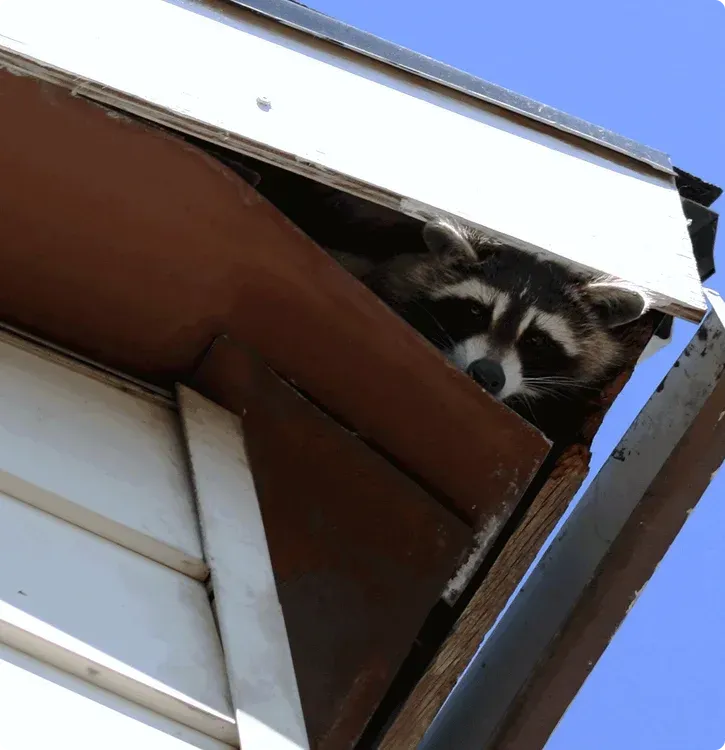
Raccoons are known to rip basketball-sized entry holes in roofs, typically gaining entry through a torn vent or soffit along the roofline. These are not subtle gaps. When a raccoon forces entry, the damage is visible from the ground or from a ladder inspection. Look specifically at the soffit and fascia boards along the eaves, roof vents, and any area where roofing material meets a vertical surface. Ripped screening, bent vent covers, and torn shingles near the roofline are all indicators.
Damaged entry points are repaired as part of our soffit, fascia, and roofline repair service after the animal has been removed.
Tracks and Smudge Marks
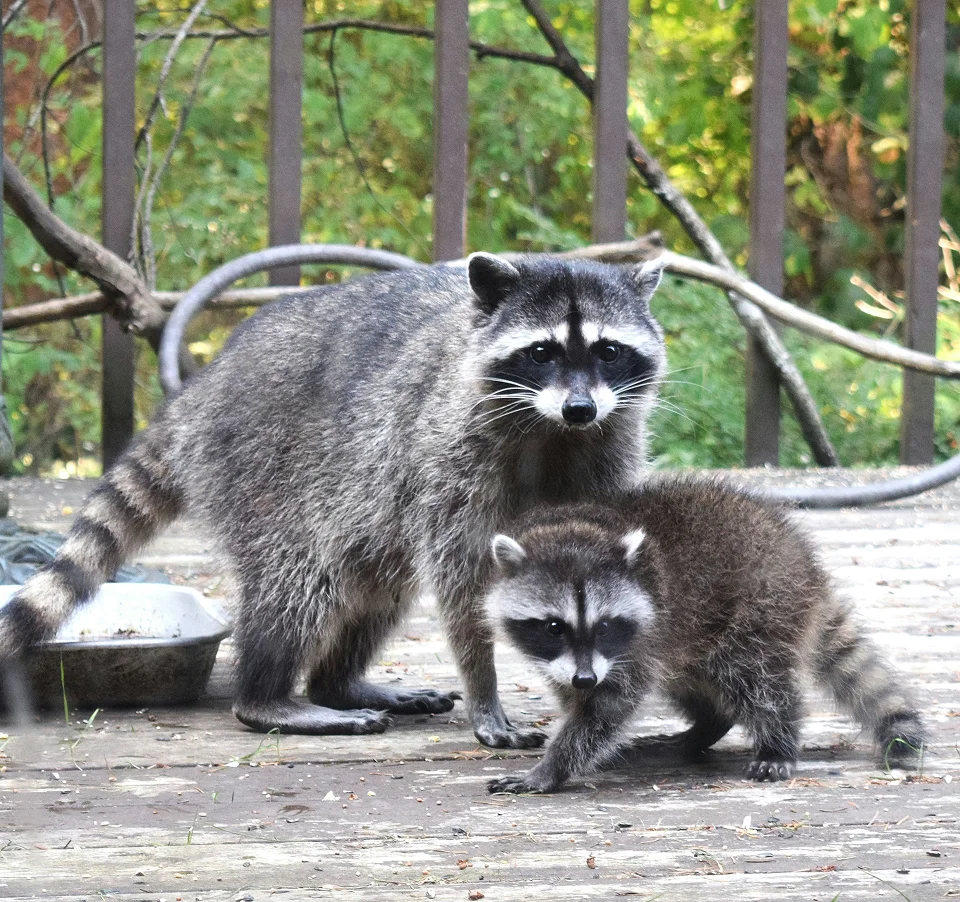
Raccoons leave distinct five-fingered tracks that look remarkably like small human handprints. Around entry points, you will often see greasy smudge marks from the oils in their fur transferring to wood and painted surfaces. These rub marks accumulate over time and darken with repeated use of the same entry point.
Disturbed or Compressed Insulation
If you have attic access and it is safe to look, displaced, flattened, or torn insulation is a clear sign of animal activity. Raccoons pull insulation apart to create nesting areas and trample it as they move through the space. Insulation that has also been soiled with droppings or urine needs to be removed and replaced entirely. Disturbed insulation alone warrants a professional inspection.
Scattered Trash or Disturbed Garden Areas
Raccoons foraging around your property at night leave additional evidence outside. Tipped trash cans, scattered debris, dug-up lawn areas, and disturbed garden beds all indicate active raccoon presence nearby. A raccoon using your property as a food source is also a raccoon that may already be denning inside it.
Why Raccoons in the Attic Become a Serious Problem Fast
Structural Issues
Raccoons are strong and persistent. They chew through wood framing, tear apart ductwork, and compress or shred insulation beyond the point of usefulness. Raccoons can easily break through fascia boards under eaves or rip off roof shingles to create entry points. Once inside, the physical alteration of the attic space continues as they nest and expand their activity area. Insulation that has been torn apart loses its thermal value, which shows up directly on your heating and cooling bills.
Our attic insulation removal and replacement service handles contaminated and destroyed insulation after removal is complete.
Health Risks
The health risks associated with raccoon activity in the attic are well documented and should not be minimized.
Raccoon roundworm (Baylisascaris procyonis) is a parasitic roundworm found in raccoon feces. Roundworm eggs can remain infectious for years in soil or surfaces. Infection in humans occurs through accidental ingestion or inhalation of eggs, which can become airborne when contaminated insulation is disturbed. It can affect the central nervous system and can eventually impair important organs, including the brain. Severe consequences of roundworm disease can result in blindness or coma.
Leptospirosis is a bacterial infection spread through raccoon urine. Raccoons shed leptospirosis bacteria in their urine, contaminating water and soil. Humans contract this disease when urine-contaminated water or soil contacts mucous membranes or broken skin. Leptospirosis can cause a severe flu-like illness that may progress to kidney failure, liver damage, or meningitis.
Rabies is the most widely known risk. All raccoon exposures including bites and scratches should be assessed by a health care provider and reported to Public Health. Raccoon exposures to pets should be reported to a veterinarian. The CDC and the Humane Society both emphasize that raccoon contact should be avoided entirely and that any suspected exposure warrants immediate medical attention.
These are not theoretical risks. They are documented, and they escalate the longer an infestation goes unaddressed.
When to Call a Professional
The simple answer is: as soon as you suspect raccoon activity.
The longer answer is that the complexity of raccoon removal is frequently underestimated. Raccoon mothers are masters at hiding baby raccoons in difficult-to-find places. They will do almost anything to get back into an attic, especially if exclusion techniques are applied before kits have been carefully removed. An incomplete removal, where the mother is excluded but kits remain inside, results in dead animals in the attic, an even more serious odor problem, and a mother raccoon that will tear through your roofline to get back in.
Professional removal involves species-specific knowledge, a full inspection of every area of the attic including spaces that are difficult and unsafe to access without proper equipment, appropriate handling protocols for mothers with young, humane trapping, and permanent exclusion of all identified entry points.
Nature Shield's raccoon removal service covers all of it. We inspect, remove, exclude, repair, and sanitize. Every wildlife-related repair is backed by a one-year warranty, and we check traps daily as a standard practice, not an exception.
What Nature Shield Does Differently
Nature Shield is a veteran-owned, fully licensed wildlife removal company serving Maryland homeowners throughout Frederick County, Carroll County, Montgomery County, and surrounding areas. We are licensed by the Maryland Department of Natural Resources Wildlife and Heritage Service, which means we operate within Maryland's legal framework for nuisance wildlife removal at every step.
We do not subcontract the repair work. We do not close a job until the entry points are sealed, the attic has been assessed for contamination, and you have a clear picture of what was done and why. If you are dealing with raccoons in the attic, the inspection is free and the assessment is honest.
Schedule Your Raccoon Inspection in Maryland
Call Nature Shield at (301) 970-9709 or request your inspection online. The sooner the problem is assessed, the less contamination, structural impact, and cost you will be dealing with at the end.
Related Services: