Frederick, MD Raccoon Removal: Signs, Risks, and How Nature Shield Gets Them Out
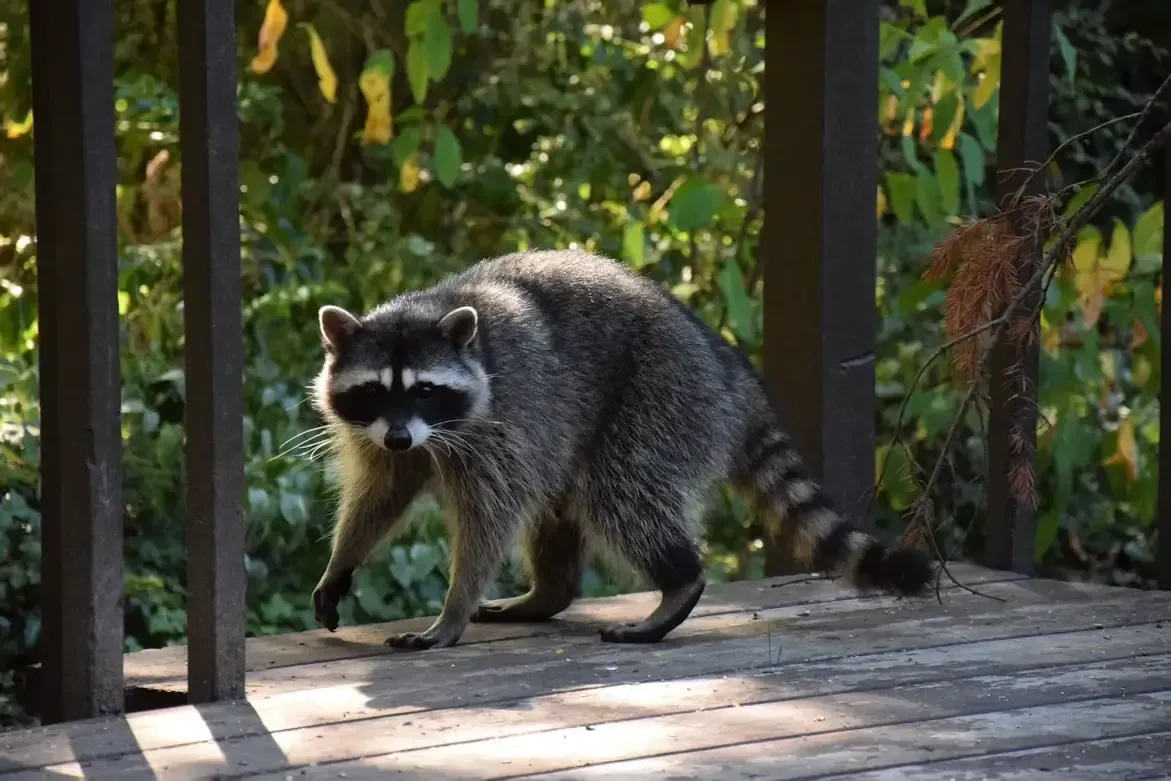
Raccoons are one of the most destructive nuisance animals in Frederick County. They are strong, persistent, and once they are inside your attic they cause damage and health risks that compound quickly. If you are hearing thumping overhead at night, noticing a persistent smell coming from your ceiling, or seeing torn soffit or roofline damage on your home's exterior, you are likely dealing with an active raccoon intrusion. This article covers what raccoons do inside an attic, why they choose Frederick homes in the first place, what the real risks are, and how Nature Shield handles removal, exclusion, and repair from start to finish.
Why Raccoons Choose Frederick Attics
Raccoons do not enter attics by accident. They are actively looking for denning sites, and an attic offers exactly what they need: warmth, shelter, and protection from predators. Frederick County's mix of established neighborhoods, mature tree canopy, and proximity to wooded corridors makes it prime raccoon territory. Trees close to rooflines give raccoons direct access to soffits and fascia boards, and once they identify a weak point they exploit it quickly.
The timing matters. Female raccoons seek out enclosed denning sites in late winter and early spring to raise their young. An attic with a compromised soffit, a deteriorating roof vent, or an open fascia gap is an attractive target. A raccoon that moves into your attic in April is not alone for long. Litters typically range from three to six kits, and by the time most homeowners realize what is happening, there is an established family overhead. Nature Shield is fully licensed by the Maryland DNR Wildlife and Heritage Service to handle nuisance wildlife throughout Frederick County.
Frederick's older housing stock is particularly vulnerable. Aging rooflines, weathered soffits, and deteriorating vent screens create access points that raccoons identify and exploit. Newer construction is not immune either. Improperly installed or unsealed gaps at roof intersections and dormers are common entry points regardless of a home's age.
What Raccoons Do Inside Your Attic
The damage raccoons cause in an attic is concentrated in two areas: insulation and mechanicals.
Insulation is the primary casualty. Raccoons tear apart and compress insulation to create nesting areas, and they establish latrine sites where they return repeatedly to deposit waste. Insulation that has been soiled with urine and feces cannot be cleaned. It has to be removed and replaced entirely. Beyond the obvious sanitation problem, destroyed insulation loses its thermal value, which shows up directly on heating and cooling bills before the homeowner even knows there is an animal in the attic.
Electrical wiring and ductwork are the other primary concern. Raccoons chew on and dislodge whatever is in their path as they move through the attic space. Damaged wiring is a fire hazard. Disconnected ductwork compromises HVAC performance and can introduce contaminated attic air into the living space below.
What raccoons do not cause is structural damage to trusses, rafters, or load-bearing elements. The damage is real and costly, but it is concentrated in insulation, mechanicals, and the entry point itself, not in the structural framing of the home.
Signs You Have Raccoons in Your Frederick Attic
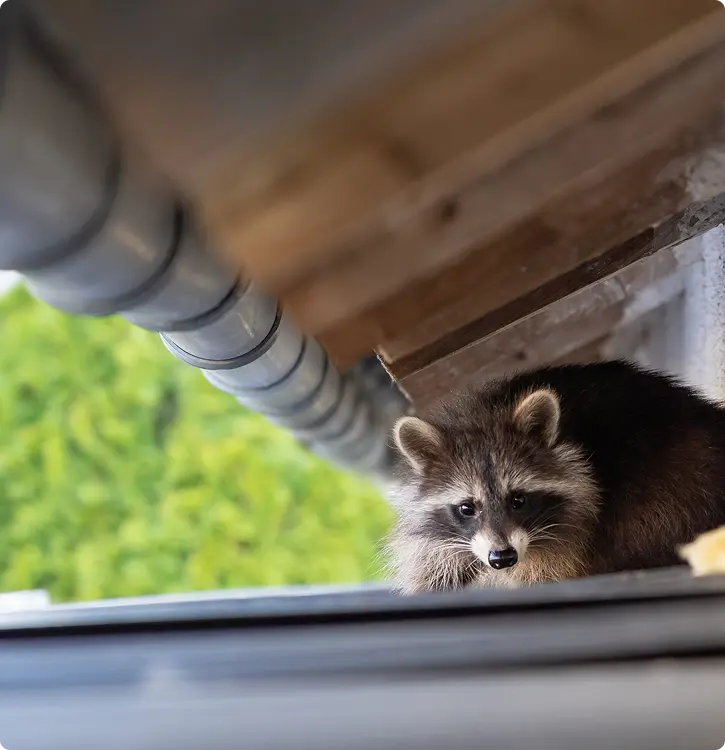
Noises at night. Raccoons are nocturnal. Heavy thumping, dragging sounds, and movement overhead in the evening and overnight hours are the most consistent indicator. The sounds are louder and more deliberate than squirrels or mice, and they often travel across the ceiling as the animal moves through the space.
Chirping or crying during the day. If you are hearing what sounds like high-pitched crying or chattering from the attic during daylight hours, that is almost certainly raccoon kits. This tells you a nursing female is present and the removal approach needs to account for the young before any exclusion work is done.
Visible entry damage on the roofline. Torn soffit panels, bent or missing vent covers, and pulled-back fascia boards are common signs of raccoon entry. These are not subtle gaps. Raccoons force entry, and the damage at the entry point is usually visible from the ground or a ladder inspection.
Odor from the ceiling or upper walls. A persistent musty, animal smell that intensifies in warm weather is a sign that a latrine site has been established in the attic. This level of contamination requires professional sanitization, not just animal removal.
Tracks and smudge marks. Greasy rub marks around entry points accumulate from the oils in raccoon fur. Inside the attic, five-fingered tracks are distinct and easy to identify in disturbed insulation or dust.
Health Risks Associated With Raccoons in the Attic
The health risks from raccoon activity in an attic are documented and serious. They do not require direct contact with the animal to be relevant.
Raccoon roundworm (Baylisascaris procyonis) is a parasitic roundworm present in raccoon feces, documented by the CDC as a serious zoonotic risk to humans and pets. Eggs can remain infectious in contaminated insulation and surfaces for years. Infection occurs through accidental ingestion or inhalation of eggs, which can become airborne when contaminated material is disturbed. Severe consequences can result in blindness or coma through damage to the central nervous system and critical organs including the brain.
Leptospirosis is a bacterial infection spread through raccoon urine. Raccoons shed leptospirosis bacteria in their urine, contaminating surfaces and materials. Humans contract this disease when contaminated material contacts mucous membranes or broken skin. It can cause a severe flu-like illness that may progress to kidney failure, liver damage, or meningitis.
Rabies is the most widely recognized risk. Raccoons are capable of carrying rabies, which is present in saliva and spreads when an infected animal bites or scratches. Any suspected exposure to a raccoon, including indirect contact through an animal that has been in your home, warrants immediate medical attention. The CDC's rabies information page is the authoritative resource for exposure protocols.
The CDC advises against handling raccoons or their waste without proper protection due to these risks. This is precisely why raccoon removal and attic cleanup are not appropriate DIY projects regardless of how straightforward the situation appears.
How Nature Shield Handles Raccoon Removal in Frederick
Our raccoon removal service in Frederick follows a structured process that addresses the animal, the entry point, the damage, and the conditions that made your home a target.
Full property inspection. Before any trap is set, we conduct a thorough inspection of the roofline, attic space, and surrounding property. This identifies all entry points, confirms species, and determines whether kits are present. This step is not optional. Missing a secondary entry point or failing to locate kits before exclusion creates a worse problem than the one being solved.
Humane trapping. We use professional-grade live traps positioned at active entry points based on behavioral evidence and fresh sign. Traps are checked daily as a standard practice. Raccoons are removed from your home in accordance with Maryland law.
Kit removal. When a nursing female is present, kits must be located and removed before any exclusion work begins. Excluding the mother without addressing the kits leaves dependent animals trapped inside the structure, which creates a serious secondary odor and contamination problem.
Entry point sealing and roofline repair. Once removal is confirmed complete, all identified entry points are permanently sealed. Our soffit, fascia, and roofline repair service addresses the physical damage at the entry point using materials appropriate for the location. Vent covers and chimney caps are installed where open access points exist. See our vent and chimney service for details.
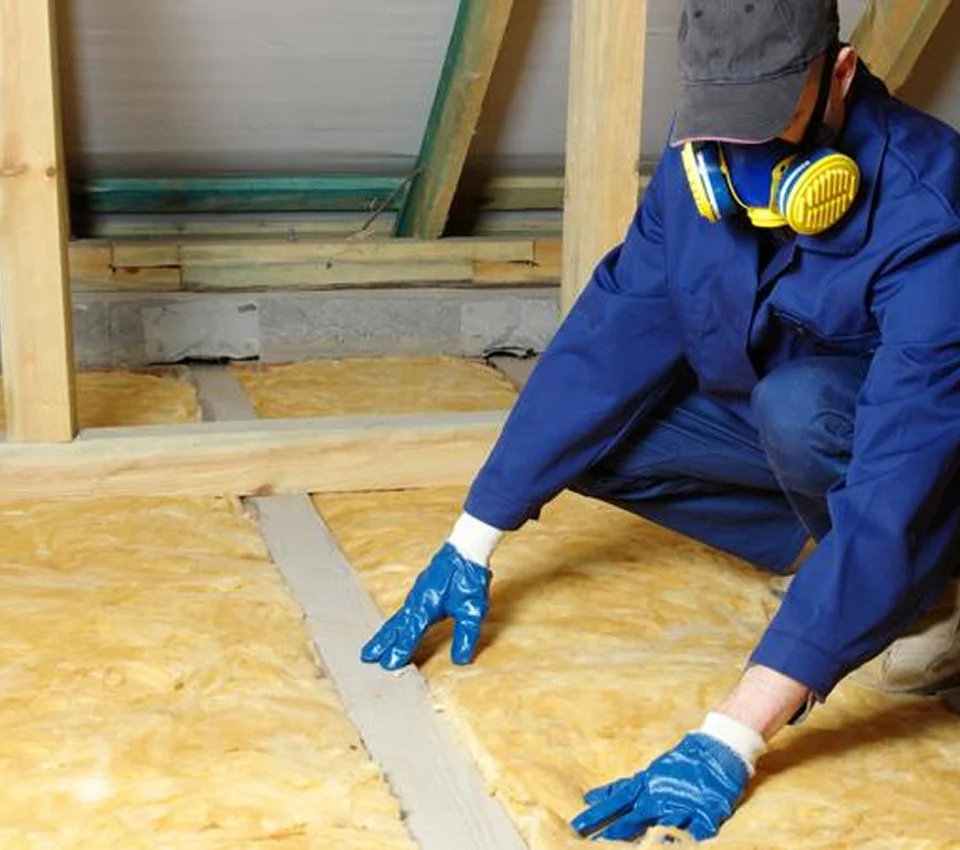
Attic insulation removal and replacement. Insulation that has been soiled, compressed, or destroyed by raccoon activity needs to be removed and replaced. Our attic insulation removal and replacement service handles this directly, including the disposal of contaminated material.
Sanitization. Raccoon latrines require professional-grade disinfection, not standard cleaning products. Our animal waste cleanup and sanitization service addresses contaminated areas using appropriate protocols and equipment.
All wildlife-related repair work is backed by a one-year warranty. If an animal re-enters through a point we sealed, we come back and address it.
Preventing Raccoons from Returning
Removal without exclusion is a temporary fix. Frederick County has a dense raccoon population, and a vacated attic entry point is an open invitation for the next animal. Prevention starts with permanently sealing the entry points used during the current intrusion and extends to eliminating the conditions that made your home attractive in the first place.
Regular roofline inspections in late winter, before denning season begins, are the most effective preventive measure for Frederick homeowners. Catching a deteriorating soffit or a failing vent cover before a raccoon finds it costs significantly less than removal and repair after the fact.
Trimming tree branches that overhang or contact the roofline removes the primary access route raccoons use to reach your home's vulnerable points. Securing trash and removing outdoor food sources reduces the attractant pressure that brings raccoons onto your property in the first place.
Our custom animal-proof barriers and gutter guards and roofline exclusion service provide permanent structural solutions for properties with recurring pressure.
Fast Response Raccoon Removal in Frederick County
Nature Shield is based in Frederick and serves homeowners throughout Frederick County, including Middletown, Walkersville, Brunswick, Thurmont, Myersville, and surrounding communities. We are a veteran-owned, fully licensed wildlife removal and pest control company with over six years of hands-on experience handling raccoon removal, exclusion, and attic repair.
We respond quickly because raccoon damage and contamination get worse with time, not better. The longer an active infestation goes unaddressed, the more insulation is destroyed, the more contamination accumulates, and the more established the animals become in the space.
Schedule Your Free Raccoon Removal Inspection in Frederick, MD
Call Nature Shield at (301) 970-9709 or request your inspection online. The inspection is free, the assessment is honest, and the quote covers the full scope of the job including removal, exclusion, and any repair work required. We will tell you exactly what is happening, what it will take to fix it, and what we will do to make sure it does not come back.
Related Services: