Found a Snake in Your Maryland Home? Here Is What to Do Right Now
Finding a snake in or around your home is one of those situations that most people want handled immediately. Whether it is coiled under your deck, inside your basement, or moving along your foundation, the instinct is the same: understand how dangerous it is, get it out, and keep it out. This guide covers all of it, with specific focus on Frederick, Maryland, where snake activity picks up sharply in late spring and runs through early fall.
Maryland Snake Identification: What You Are Likely Dealing With
Maryland has several species of snakes that live in rural, suburban, and urban areas. All are perfectly harmless except for the copperhead and the timber rattlesnake, both of which are found mostly in the northern and western regions of the state. Frederick County sits squarely in that zone, which means both venomous species are genuinely present here, not just theoretical possibilities.
Of the 27 kinds of snakes inhabiting Maryland, two are venomous: the northern copperhead and the timber rattlesnake. Knowing which one you are looking at, or whether what you found is venomous at all, is the most important step before doing anything else.
Northern Copperhead
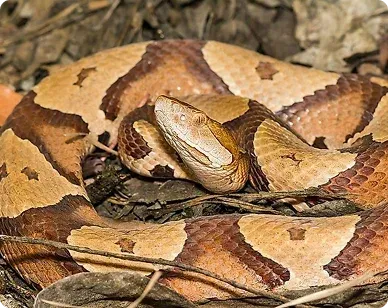
Northern copperheads have dark-colored crossbands shaped like an hourglass. Young copperheads have a neon yellow tail used to attract food. They are most commonly found on rocky hillsides and river valleys with lots of cover. Copperheads will grow to an average of 36 inches and are fairly heavy-bodied snakes.
Most of the time when people see "copperheads," they are seeing another similarly colored species of non-venomous snake. Copperheads are not nearly as common as people believe they are. Unfortunately, many harmless snakes are killed every year when they are mistaken for copperheads.
On average, Maryland Poison Control receives 100 snake bite cases each year, about half of which are due to bites from venomous snakes, mostly copperhead bites. Any suspected copperhead encounter should be treated seriously. Do not attempt to handle or kill it yourself.
Timber Rattlesnake
Timber rattlesnakes are typically a western Maryland species, from Frederick to Garrett County. That puts Frederick County within their known range. The timber rattlesnake has two color phases. Yellow-phase snakes have dark brown to black V-shaped chevrons over a yellow, gray or brown back. Black-phase timber rattlesnakes will have a black head and black chevrons or blotches on a field of dark brown or black. It has a triangular and flattened head with facial pits between each eye and nostril.
The timber rattlesnake is the only snake in Maryland with a rattle, which makes it the easier of the two venomous species to identify by sound. That said, do not rely on hearing a rattle. Rattlesnakes do not always warn before striking.
Common Non-Venomous Species Around Frederick Homes
The most common species of snakes that live around the home include the eastern garter snake, brown snake, worm snake, ringneck snake, hog-nosed snake, black rat snake, and eastern king snake. Northern water snakes are sometimes seen if there is a stream or pond nearby.
Eastern ratsnakes (commonly called black rat snakes) are by far the most frequent species homeowners in Frederick encounter. They are large, can exceed five feet, and are often mistaken for something dangerous. They are not. They are also effective rodent hunters, which is part of why they show up near homes in the first place.
Some snake species, like eastern ratsnakes and common watersnakes, will flatten their heads when threatened to mimic pit vipers. This behavior causes a lot of unnecessary panic and, worse, unnecessary killing of beneficial snakes. If you are not certain what you are looking at, do not approach it. Call the professionals at Nature Shield for professional removal.
The Maryland DNR's venomous snake identification page is a great reference if you want to compare what you are seeing against official descriptions, from a safe distance.
Why Snakes Enter Homes in Frederick County
Snakes do not seek out homes the way rodents do. They are not looking for shelter in the same sense. They follow food, warmth, and access points, which means if a snake is inside or around your home, something on your property is attracting them or something is letting them in.
Rodent activity. This is the primary driver. Ratsnakes in particular follow mouse and rat populations directly into crawl spaces, basements, and wall voids. If you have a rodent problem, snakes will find it. Nature Shield’s rodent control services address the food source that draws snakes into the structure in the first place.
Warmth and shelter. Snakes are ectothermic, meaning they rely on external temperatures to regulate their body heat. In late spring, they are actively seeking warm surfaces and sheltered areas. Crawl spaces, stone foundations, and debris piles near your home are ideal resting spots.
Open entry points. Gaps at the base of your foundation, unsealed crawl space vents, damaged soffits, and uncapped drains are all potential access routes. A snake can pass through a surprisingly small gap. Anything a pencil can pass through is a potential entry point for smaller species.
Water sources. Properties near streams, drainage areas, ponds, or wet ditches in Frederick County see significantly more snake activity. Northern water snakes and garter snakes are closely tied to water and will range into nearby yards and structures.
What to Do If You Find a Snake
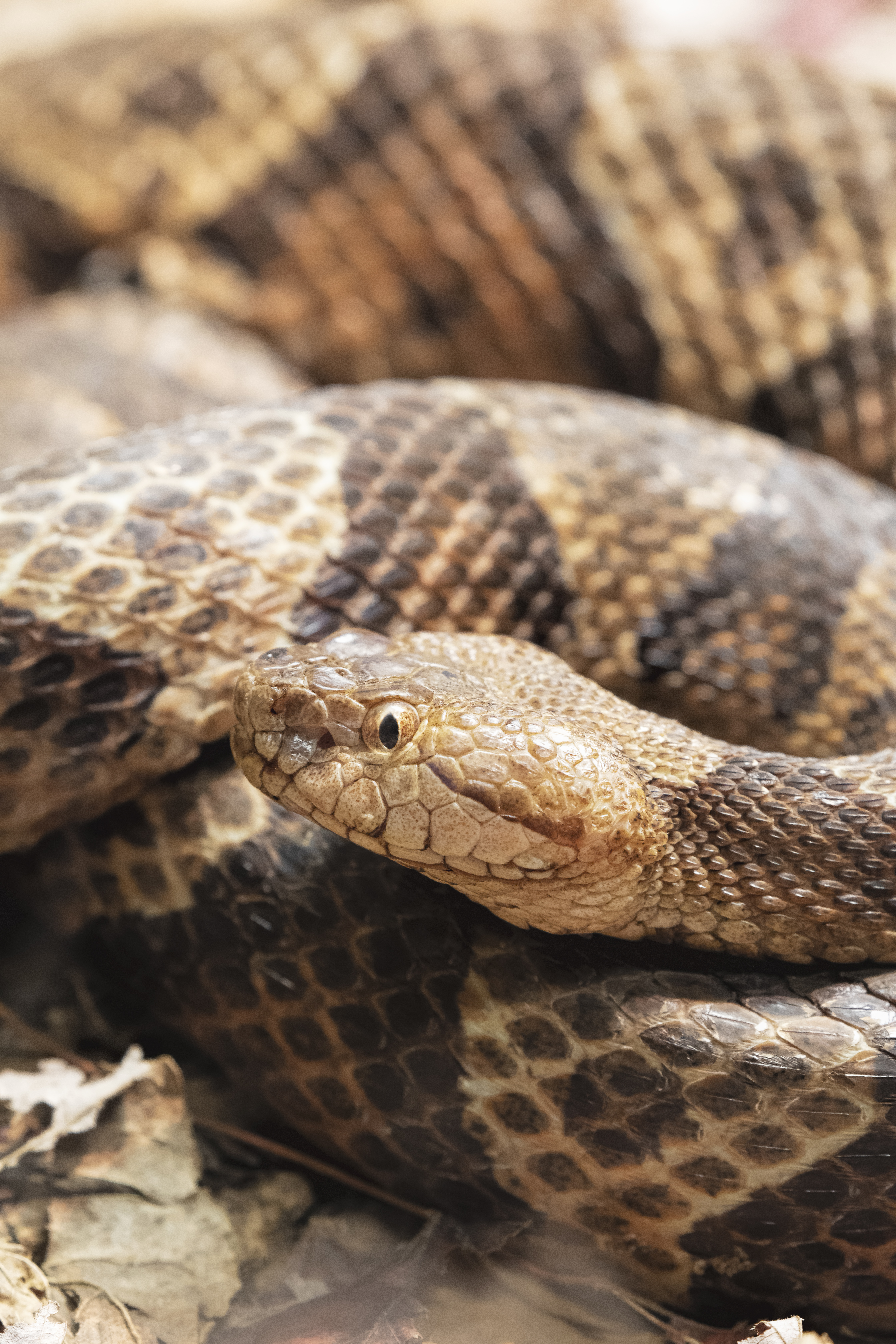
The two most important rules: do not handle it, and do not try to kill it.
Many bites occur when people attempt to capture or kill venomous snakes. Never handle venomous snakes, alive or dead. Leave snakes alone. Even experienced handlers get bitten when people try to take matters into their own hands before a professional arrives.
If the snake is inside your home, keep children and pets away from the room, note the location, and call for professional removal. If it is outside and not blocking access to your home, there is no immediate emergency. Document what it looks like if you can do so safely from a distance, then call.
What you should not do: don’t try to pin it with a shovel, pick it up with gloves, or use repellents. Commercial snake repellents have no reliable scientific backing and are a waste of money. Snake traps sold at hardware stores are largely ineffective without knowing the species, behavior, and entry point.
How Professional Snake Removal Works
Our snake removal process in Frederick and throughout Maryland follows a structured approach that treats both the immediate problem and the underlying conditions that caused it.
Species identification. Before anything else is done, the snake needs to be identified. Handling protocol is different for venomous species, and understanding the species also tells us why it is there and what needs to change to prevent recurrence.
Safe capture and removal. We use snake hooks, tubes, and containment equipment appropriate for the species. For venomous snakes, the process is methodical and does not get rushed. For non-venomous species, capture is typically quick. Either way, the animal is removed intact and alive.
Full property inspection. A single snake removal without an inspection is a temporary fix. We walk the full perimeter, check crawl space vents and access points, assess the foundation for gaps, and look for the conditions that created the problem. This is where the permanent solution starts.
Entry point sealing. Identified gaps and access points are sealed using materials appropriate for the location. Our foundation and crawl space sealing service is often part of the solution for snakes that have been entering through the base of the structure. Vent covers and chimney caps also eliminate overhead entry points. See our vent and chimney service for details on that piece of the work.
Rodent source treatment. If rodent activity is present and drawing snakes into the structure, we address that directly. Removing the snake without removing its food source means you will have another snake in the same location within weeks.
Snake Prevention for Frederick County Homeowners
Once a snake has been removed and entry points are sealed, these steps reduce the likelihood of future activity around your property.
Eliminate harborage areas. Brush piles, wood stacks, rock piles, and dense ground-level vegetation near your foundation are all prime snake habitat. Moving firewood away from the house and keeping landscaping trimmed back from the foundation wall makes your property significantly less attractive.
Seal the foundation perimeter. Any gap larger than a quarter inch at the base of your home is an access point. Our custom animal-proof barriers can close these gaps permanently using materials snakes cannot force through.
Address moisture and rodents. Standing water, leaking crawl spaces, and active rodent populations create the exact conditions that bring snakes close to your home. Fix the drainage, seal the crawl space, and eliminate the rodents and you eliminate the primary attractants.
Cover vents and gaps in the roofline. Snakes can climb. Ratsnakes in particular are capable climbers and can access elevated openings. Properly screened and secured vents eliminate that pathway.
Keep the lawn maintained. Tall grass provides cover for snakes moving across your yard. Regular mowing keeps the area near your home less hospitable.
Maryland Law and Snake Removal
Most snake species in Maryland are protected under state wildlife law and cannot be killed. The Maryland Department of Natural Resources classifies the majority of the state's 27 snake species as protected nongame wildlife. Lethal removal requires specific justification and, in most cases, is not legally permitted by homeowners acting on their own.
This is one of the practical reasons to use a licensed professional. Nature Shield is fully licensed by the Maryland DNR Wildlife and Heritage Service to handle nuisance wildlife, including snakes, throughout Frederick County. We operate within the law and use methods that keep you legally protected.
If you have questions about what is and is not permitted under Maryland wildlife regulations, the Maryland DNR Nuisance Wildlife page is the authoritative source.
Nature Shield Serves Frederick County and Surrounding Areas
Nature Shield is based in Frederick and provides snake removal throughout Frederick County, including Middletown, Walkersville, Brunswick, Thurmont, Myersville, and nearby communities. We are a veteran-owned, licensed, and insured wildlife control company with over six years of hands-on experience handling snake encounters of all types, including venomous species.
If you have found a snake in your home, crawl space, garage, or yard, do not wait to see if it leaves on its own. It probably will not, and if it found its way in once, it will find its way in again.
Call Nature Shield at (301) 970-9709 or request your inspection online. We can identify the species, remove it safely, inspect your property, and close the entry points that let it in. One call handles the whole problem.
Related Services: