Squirrel Removal in Frederick, MD: Why Attic Squirrels Are More Dangerous Than You Think
Squirrels are one of the most common attic intruders in Frederick County, and they are also one of the most underestimated. Most homeowners hear scratching in the walls or ceiling and assume the problem is minor. It is not. Squirrels chew constantly, they breed twice a year, and the damage they cause to electrical wiring is a documented fire hazard that can develop long before anyone realizes there is an animal in the attic. This article covers what squirrel activity in a Frederick home actually looks like, what the real risks are, and how Nature Shield handles removal, exclusion, and repair from start to finish.
Why Squirrels Target Frederick Homes
Frederick County's mature tree canopy is one of the primary reasons squirrel pressure is so consistent here. Trees with branches that overhang or contact rooflines give squirrels direct access to the most vulnerable points of a home: soffits, fascia boards, roof vents, and deteriorating edge trim. Once a squirrel identifies a weak point it exploits it quickly, and once inside an attic it does not leave on its own.
Timing matters with squirrels more than with most attic wildlife. Gray squirrels breed twice a year, in late winter and again in midsummer. Both breeding cycles drive females to seek enclosed denning sites, and an attic with a compromised roofline is an attractive target. A single squirrel that moves in during January can have a litter of three to five young by March. The second breeding cycle in July means the same attic can support a second litter before the year is out. What starts as one animal becomes a recurring infestation without professional intervention.
Frederick's older neighborhoods are particularly vulnerable. Aging soffits, weathered fascia boards, and deteriorating vent screens create access points that squirrels identify and exploit. Newer construction is not immune. Improperly sealed gaps at roof intersections, dormers, and gable vents are common entry points regardless of a home's age.
Signs You Have Squirrels in Your Frederick Attic
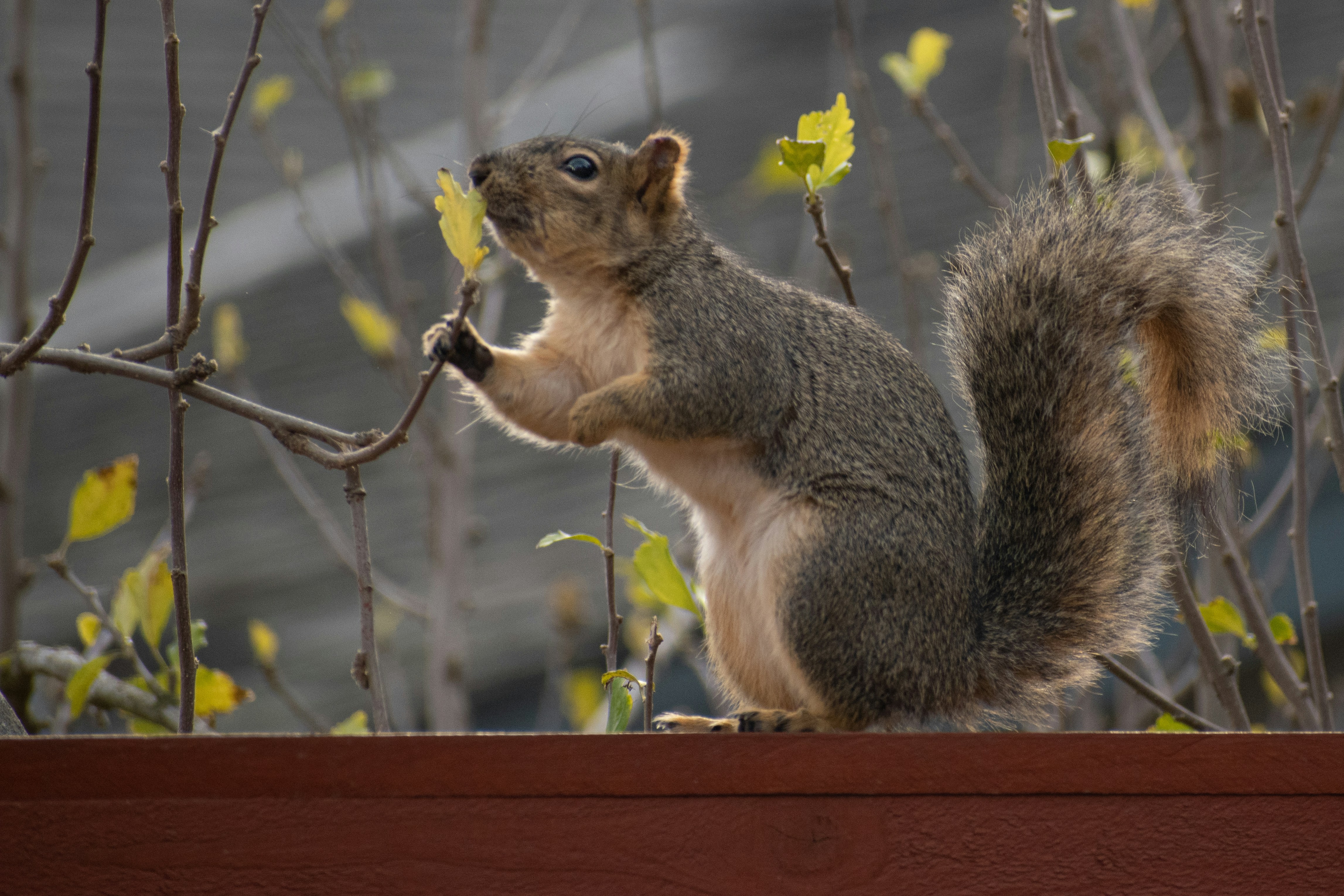
Scratching and scurrying sounds at dawn and dusk. Squirrels are diurnal, meaning they are active during the day rather than at night. If you are hearing rapid scratching, scurrying, or rolling sounds overhead in the early morning or late afternoon, that timing points strongly toward squirrels rather than raccoons or rodents. The sounds are quick and light compared to the heavy deliberate thumping of a raccoon.
Chewing sounds. Squirrels chew constantly to keep their teeth worn down. Inside an attic this means gnawing on wood framing, insulation, ductwork, and wiring. A persistent grinding or chewing sound from the attic or inside walls is a specific indicator of squirrel activity.
Visible entry damage on the roofline. Squirrels chew through soft roofing materials, push through deteriorating soffit panels, and exploit existing gaps at fascia and trim junctions. Entry points are typically smaller than raccoon entries but are often marked by chewed edges and wood debris below the access point.
Nesting material in the attic. Squirrels pull insulation apart and bring in leaves, twigs, and shredded material to build nests. Disturbed or displaced insulation with concentrated nesting material in one area is a clear sign of active squirrel habitation.
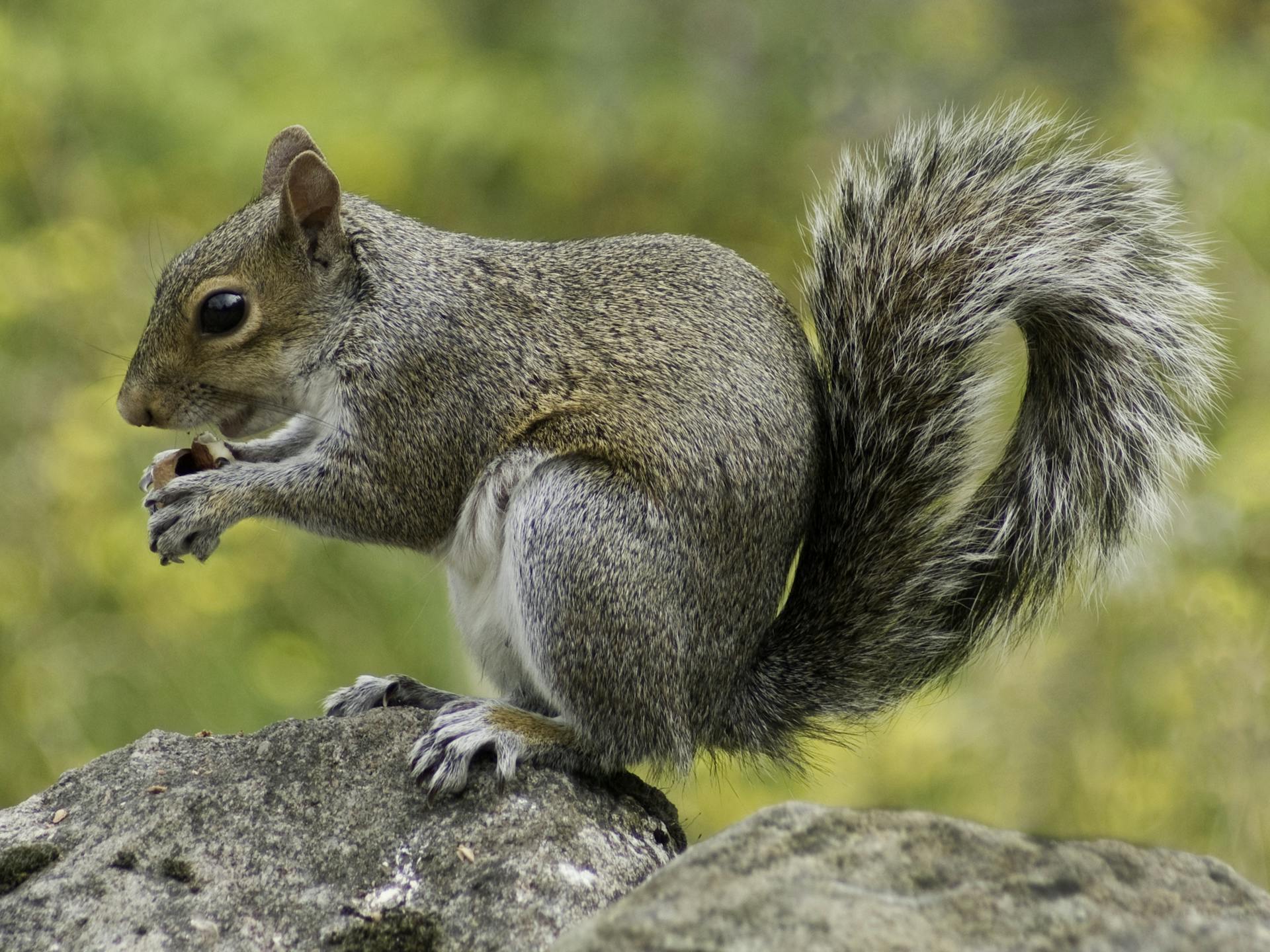
Droppings. Squirrel droppings are small, roughly the size of a grain of rice, and scattered throughout the attic rather than concentrated in a latrine site the way raccoon droppings are. Finding them in the attic or in living spaces below through gaps in the ceiling indicates an active infestation.
Increased exterior activity on the roofline. Squirrels moving repeatedly along the same path on your roof, particularly near soffits or dormers, often indicates they have established an entry point and are commuting in and out of the attic on a regular basis.
Why Squirrels in the Attic Are a Serious Problem
Electrical Fire Risk
This is the risk most homeowners do not associate with squirrels until it is too late. Squirrels chew on electrical wiring as a matter of routine behavior, not because they are attracted to wiring specifically but because they chew on everything in their path. Stripped or severed wiring in an attic creates exposed conductors that can arc against insulation, wood framing, or nesting material. The Electrical Safety Foundation International estimates that animals chewing on wiring are a contributing factor in a significant number of residential electrical fires annually. The problem is compounded by the fact that wiring damage in an attic is invisible from the living space below and often goes undetected until an electrical fault or fire occurs.
Insulation Destruction
Squirrels tear apart and compress insulation to create nesting areas and chew through it while foraging. Insulation that has been physically destroyed loses its thermal value directly, which shows up on heating and cooling bills before the homeowner ever confirms there is an animal present. Unlike raccoon contamination, which requires full insulation removal and replacement, squirrel insulation damage is sometimes patchable depending on scope, but a thorough inspection is required to make that determination accurately. Our attic insulation removal and replacement service handles both scenarios.
Health Risks from Droppings
Squirrel droppings and urine can carry leptospirosis and salmonella, both of which present health risks through indirect contact or contamination of surfaces and materials. The risk level is lower than raccoon contamination but not negligible, particularly in attics where HVAC systems can circulate contaminated air into the living space below. Any confirmed squirrel infestation with significant droppings accumulation should include a professional sanitization assessment. Our animal waste cleanup and sanitization service covers this directly.
Rapid Reinfestation Without Exclusion
Squirrels breed twice annually and maintain strong site fidelity, meaning they return to the same denning locations repeatedly. Trapping without permanent exclusion of the entry point produces a temporary result at best. The same entry point that allowed the original infestation will be used by the next animal within the same season.
How Nature Shield Handles Squirrel Removal in Frederick
Our squirrel removal service in Frederick uses a structured process that addresses the animal, the entry point, and the conditions that created the problem.
Full roofline and attic inspection. Before any work begins, we conduct a thorough inspection of the exterior roofline and attic space to identify all entry points, confirm species, and assess the scope of any damage. A single visible entry point rarely tells the complete story. Secondary gaps along the fascia, at roof vents, and at soffit intersections are commonly missed without a systematic inspection.
One-way exclusion devices. Our primary removal method for squirrels is the one-way exclusion device, which allows squirrels to exit the attic through the primary entry point but prevents re-entry. This approach is effective, low-stress for the animal, and avoids the complications of trapping when young may be present. Exclusion devices are monitored and removed once all activity has ceased and the attic is confirmed clear.
Permanent entry point sealing. Once the attic is clear, all identified entry points are permanently sealed using materials appropriate for each location. Our soffit, fascia, and roofline repair service addresses physical damage at entry points directly. Open vents and chimney access points are closed with properly screened covers through our vent covers and chimney caps service.
Damage assessment and repair. Following removal and exclusion, we assess the attic for wiring damage, insulation loss, and contamination. Wiring concerns are flagged for a licensed electrician. Insulation replacement and sanitization are handled directly through Nature Shield where needed.
All wildlife-related repair work is backed by a one-year warranty.
Preventing Squirrels from Returning
The single most effective preventive measure for Frederick homeowners is keeping tree branches trimmed back from the roofline. A gap of at least eight feet between the nearest branch and any roofline contact point removes the primary access route squirrels use. This is also the lowest-cost prevention measure available and does not require a service call.
Beyond tree trimming, regular roofline inspections in late winter and early summer, immediately before each breeding cycle begins, give homeowners the best chance of catching deteriorating entry points before squirrels find them. Our gutter guards and roofline exclusion service provides a permanent structural solution for rooflines with recurring vulnerability. Our custom animal-proof barriers address specific access points that standard roofline repairs do not cover.
Fast Response Squirrel Removal Throughout Frederick County
Nature Shield is based in Frederick and serves homeowners throughout Frederick County, including Middletown, Walkersville, Brunswick, Thurmont, Myersville, and surrounding communities. We are a veteran-owned, fully licensed wildlife removal and pest control company with over six years of experience handling squirrel removal, exclusion, and attic repair.
Squirrel damage is progressive. The longer an active infestation continues, the more wiring is at risk, the more insulation is destroyed, and the more established the animals become in the space. Early intervention consistently produces a lower total cost than waiting to confirm the scope of the problem.
Schedule Your Free Squirrel Removal Inspection in Frederick, MD
Call Nature Shield at (301) 970-9709 or request your inspection online. The inspection is free, the assessment covers the full roofline and attic, and the quote reflects the complete scope of the job including removal, exclusion, and any repair work required.
Related Services: