Keeping Pest Birds Off Your Roof and Out of Your Gutters in Maryland
If you're hearing birds on your roofline or finding your gutters packed with nest material, you're dealing with a different problem than birds nesting in a dryer vent. Vent intrusions are usually European Starlings, and we cover that specific situation in detail elsewhere. Roof and gutter nesting is its own problem, with its own set of species, its own damage pattern, and its own legal wrinkle that a lot of homeowners get wrong. July doesn't mark the end of nesting season either. Pigeons and house sparrows both raise multiple broods through the summer, so a roofline that looked clear in May can have an active nest by mid-July.
The Birds Actually Causing Problems on Maryland Roofs and Gutters
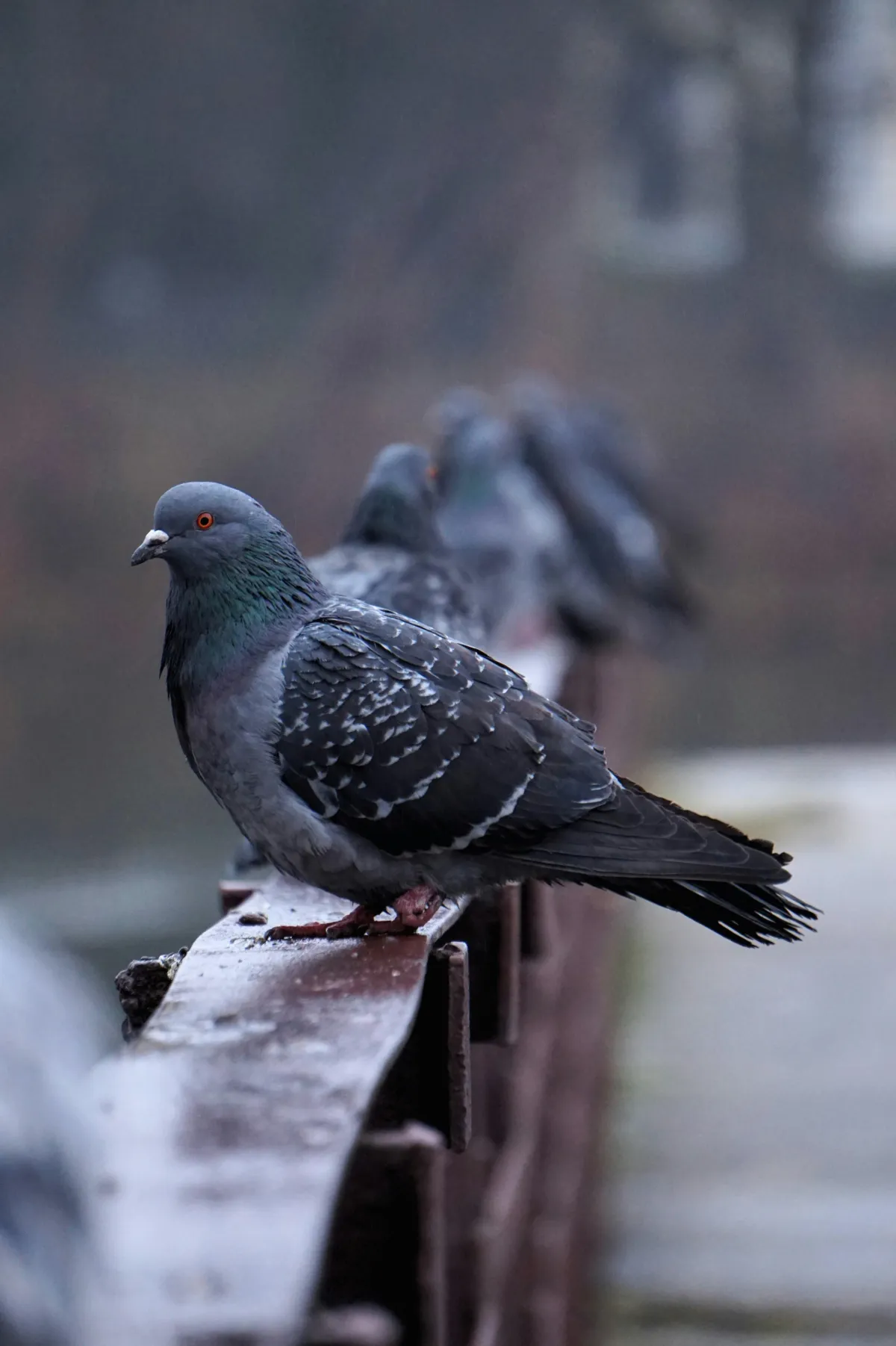
Most roofline calls come down to two birds. Rock pigeons, commonly called feral pigeons, favor flat roof sections, roof edges, and the space under solar panels, and they breed nearly year round, which is why a pigeon problem rarely resolves on its own. House sparrows are the other frequent offender. They're aggressive cavity nesters that pack gutters, roof vents, and gaps behind fascia boards with dense nests, often displacing other birds in the process.
Then there's the bird most homeowners misidentify. Barn swallows and cliff swallows build mud nests directly under roof eaves and overhangs, and from the ground, that nest can look identical to a pigeon or sparrow nest. The difference matters more than the shape of the nest. Swallows are native, and unlike pigeons, sparrows, and starlings, they're fully protected. That distinction is the whole legal question this article exists to answer, so we'll come back to it.
What Roof and Gutter Nesting Actually Does to Your Home
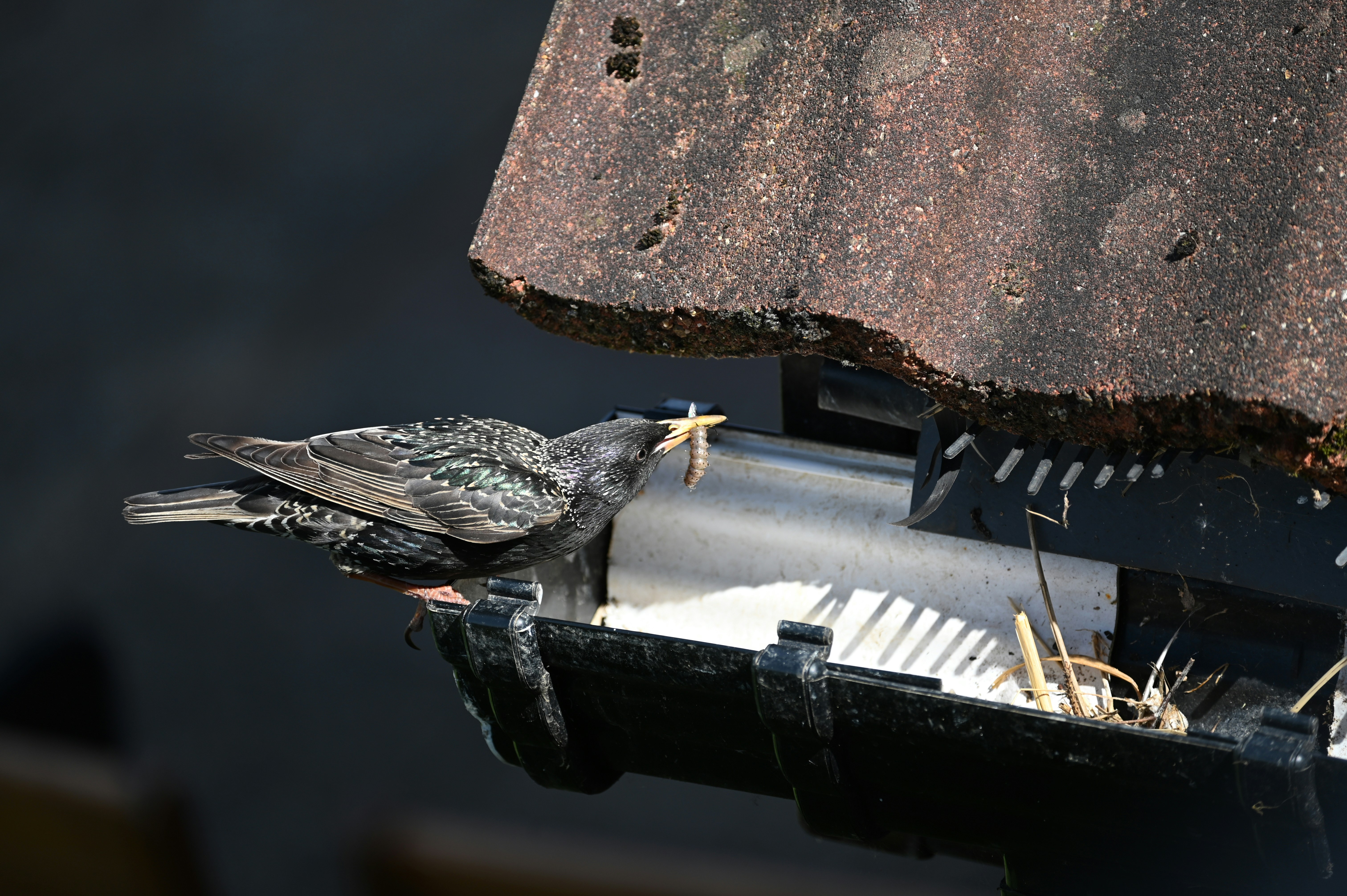
A nest sitting in a gutter isn't just clutter. It blocks water flow, which backs up under shingles and rots the fascia board behind it. In winter, that same blockage contributes to ice dams. Droppings compound the damage on their own: the uric acid in bird droppings is corrosive enough to degrade roofing material and gutter metal over a season of exposure, and heavy accumulation stains roofing and creates a slip hazard on walkways below.
The health risk is real too. Pigeon droppings in particular are associated with histoplasmosis, a fungal lung infection, and salmonellosis, and accumulated nest material often carries mites and other parasites that spread beyond the nest once the birds are gone.
The Legal Line Homeowners Need to Know Before Touching a Nest
This is where roofline birds differ from a straightforward pigeon problem. The Migratory Bird Treaty Act makes it illegal to disturb the nest of any native bird without a permit, and that protection holds even if the nest is in an inconvenient spot or the birds are creating a mess underneath it, which is exactly the scenario with Barn Swallows nesting on a roofline. Active swallow nests with eggs or chicks inside cannot legally be touched or destroyed without a federal permit, though inactive nests with no eggs or chicks don't require one.
Introduced species, specifically House Sparrows, European Starlings, and Rock Pigeons, are not protected under federal law, which is why they make up the bulk of the removal work we actually do. But that carve-out only helps if the species has been correctly identified first, and the U.S. Fish and Wildlife Service enforces violations with penalties that can reach six months in jail and a $15,000 fine, along with seizure of any equipment used. Removing what turns out to be an active swallow nest because it looked like a pigeon nest from the ground doesn't hold up as a defense.
There's also a licensing detail specific to this category of bird that most homeowners never hear. Controlling native protected species falls under Maryland's DNR-issued Wildlife Damage Control Operator permit, but pigeons, starlings, and house sparrows are handled differently. Because they're non-native, their control is exempted from that DNR permit requirement and instead falls under a Maryland Department of Agriculture pest control certification. It's a genuinely different regulatory lane, and it's a big part of why a wildlife removal company needs to hold both licenses to legally handle whatever actually shows up on your roof.
How Professional Roofline and Gutter Bird Control Works
The first step is always identification, not removal. A technician needs to confirm the species and whether a nest is active before anything is touched. If it's an inactive pigeon or sparrow nest, cleanup and exclusion happen right away. If it's an active nest of a protected species like a swallow, the legal path is to wait for the nest to become inactive after the young have fledged, then exclude the site so it isn't reused next season.
Exclusion itself is the long-term fix. That means physical barriers that keep birds from landing or nesting on the roofline in the first place, along with gutter protection that keeps future nest material from collecting where it causes damage. Our gutter guards and roofline exclusion service and soffit, fascia, and roofline sealing service cover that structural side directly. Where droppings have already accumulated, our animal waste cleanup and sanitization service handles the health side of the cleanup. And if the actual problem turns out to be inside a vent rather than on the roofline itself, that's a different service entirely, covered here.
Serving Homeowners Throughout Maryland
Nature Shield provides licensed bird control and exclusion throughout Frederick County, Carroll County, Montgomery County, and the surrounding Maryland communities. We're based in Frederick and respond quickly across our full service area, with the licensing to handle both the common invasive species and the legal complexity that comes with a protected one showing up in the same spot.
Schedule Your Free Bird Inspection in Maryland
Call Nature Shield at (301) 970-9709 or request your inspection online. We'll identify what's actually nesting on your roof, confirm whether it's protected, and lay out a plan that's legal and permanent, not a guess based on what the nest looks like from the ground.